






MES is now undoubtedly the basis of digitalization and the foundation of modern manufacturing activity. In the environment that can be described as Industry 4.0, it is a key factor in determining a possible business success. The reality of Industry 4.0, which – like never before – is analysed and evaluated through the prism of KPIs and all other measurements, requires the adjustment of production processes to MES assumptions.
Get more insight what is Industry 4.0
MES – Manufacturing Execution System – in the context of production management provides solutions that are crucial from the company’s point of view: it streamlines business processes and enables full control of the manufacturing process. However, if we look at the implementation of MES in more detail, what are the benefits of implementing it?
1. Better analysis of the manufacturing process
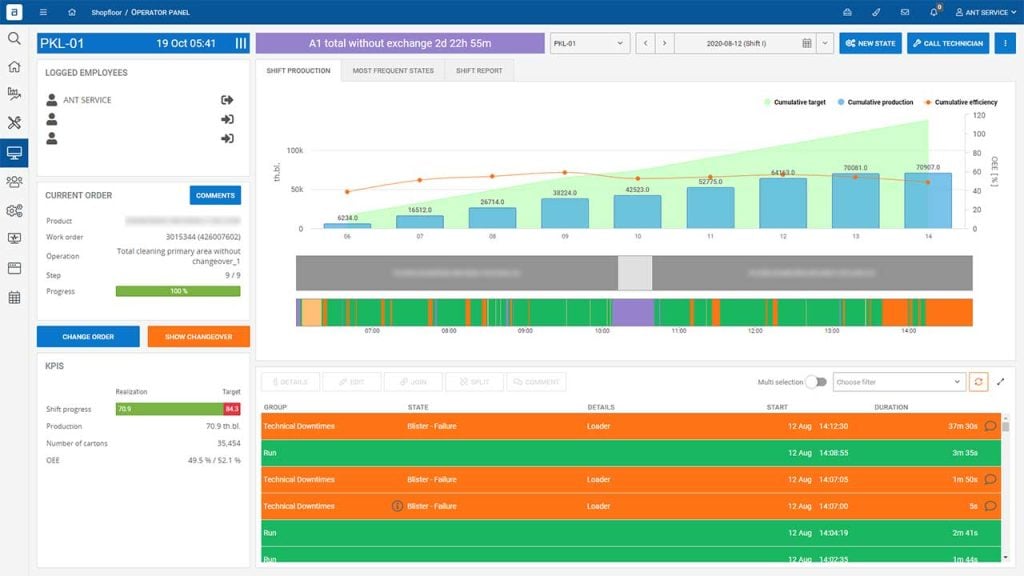
It is also worth looking at MES applications through the prism of data monitoring – OEE trends being of paramount importance for the effectiveness of the activities undertaken. This solution ensures better planning, control and execution of orders.
2. Data provided in real time
Automatic data collection via PLCs, sensors and operator input ensures better assessment of production statuses and progress in real time. Although this advantage is mainly perceived through better, more efficient monitoring of KPIs or assessment of the real OEE value, it can be reduced to the following general observation – MES provides the administrator or manager with a complete overview of all processes occurring in the company.
3.质量受控
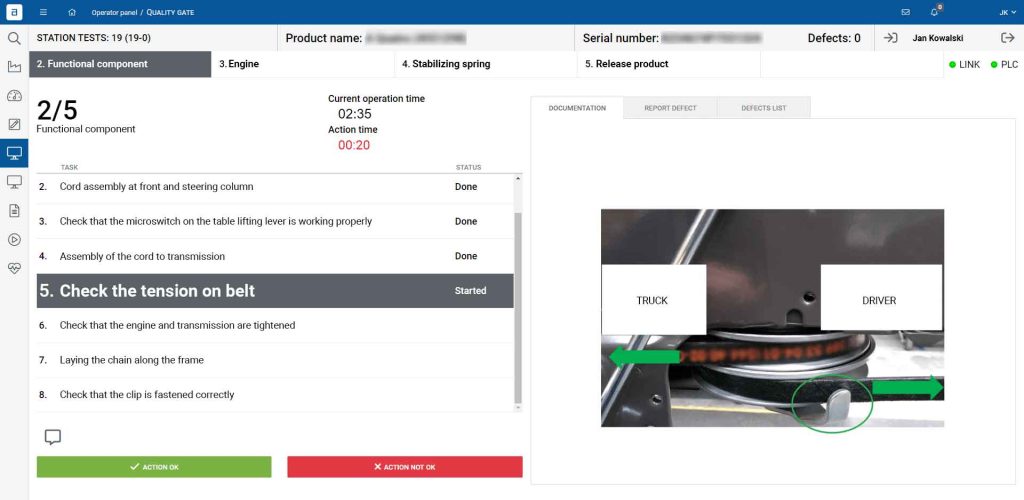
然而,这不仅是指诊断,也是指预防。在企业中实施MES能够 尽早发现不稳定的过程.这使得对质量结果和潜在错误警报的反应更快。一方面,这种对缺陷的实时分析和通知的自动化减少了花在有问题的产品批次上的风险。另一方面,它始终是一个极其宝贵的经验和关于可能的问题来源的知识的包袱。
4.增加机器的可用性
5.性能明显提高
- 对变化的监测
- 更快的生产启动
6.及时执行命令
7.无纸化
多年来,流通中的过多纸张--几十份文件、分析报告和证书--被视为一种必要的罪恶。企业中的MES有效地减少了它的使用。数字化表格的引入--标准表格和创建自己的能力--以及其他PDF格式的文件是一些实实在在的好处。 主要的好处是降低了成本 和纸张费用。其次是更新数据的便利性和速度,以及对数据状态的确定性。MES数字化取代无处不在的纸张也意味着更快、更简单、更直观地生成数据报告。
8.减少生产浪费
实施MES意味着显著 更有效的废物管理.该系统提供实时的缺陷通知。收集到的数据可以更好地监测进度和数量。MES还能实现错误控制。
9.消除人为错误
人可能是生产过程中最薄弱的环节。MES和一般的自动化使 更好地控制人为因素.其附加值是对以KPI表示的目标进行更好的分析--数据对管理层和操作人员来说更加透明。这一切都归结为一个方案,在这个方案中,项目经理可以确保为机器设置特定的参数--没有人为错误或延误。
10.过程的可追溯性
11.更短的报告时间
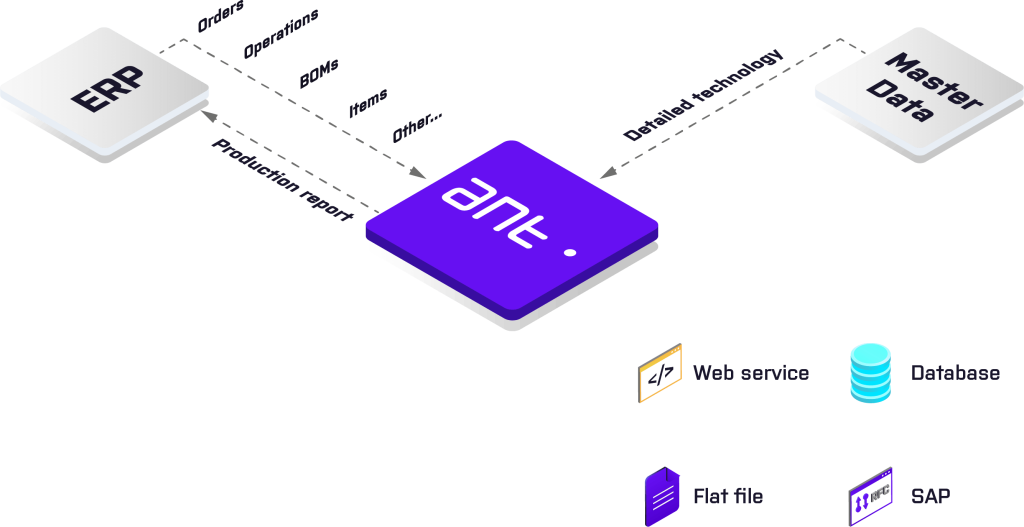
MES的实施代表着办公效率的明显提高。实施与其他软件模块的使用相结合,扩大了可能性。它有可能获得一个 自动接口 为其他类型的软件提供生产- erp, aps, wms, cmms,等等。快速获取汇总数据和详细信息也是同步接口的结果。
12.实际生产成本和利润率
- 返工的时间和成本
- 废弃物的成本
- 能源的实际成本
13.新员工入职更快
- 一套供操作员使用的分步指示
- 易于获取文件
- 与管理层和质量、技术和维修部门更好地沟通
MES和实施--利益的前景
实施MES提供了几个明显的优势,对公司和其生产状况有真正的积极影响。 重要的是,投资回报过程本身是快速的.正如分析所显示的,根据公司的规模,需要12至24个月才能实现投资回报。