





云制造
一个安全的地点存放你的所有生产数据
什么是云制造?
Cloud manufacturing is the application of cloud computing in manufacturing. It enables manufacturers to connect, share, and manage data and resources using the Internet. The concept of cloud manufacturing was proposed as a way to apply cloud computing to the global manufacturing industry. It can improve manufacturing efficiency and flexibility, and reduce costs.
Cloud MES is driving new opportunities:
- Horizontal integration of suppliers across the value chain
- Cloud-based MES solutions can help to improve horizontal integration across the supply chain. This is because cloud-based solutions can provide visibility into the manufacturing process from end to end. This visibility can help to identify bottlenecks and optimize the manufacturing process.
- Tracking carbon emissions
- Cloud-based MES solutions can help factories track their carbon emissions. By tracking production data, such as energy use, in the cloud, factories can identify opportunities to reduce their emissions. Additionally, cloud-based MES solutions can help factories track their progress towards emissions reduction goals.
- Seamless mergers and acquisitions
- Cloud-based MES solutions can help factories seamlessly merge with or acquire other factories. By tracking production data in the cloud, factories can easily share data between factories. Additionally, cloud-based MES solutions can help factories keep track of production schedules and recipes, making it easy to transition to a new factory.
- Dynamic production scheduling
- Cloud-based MES solutions can help factories dynamically schedule production. By tracking production data in the cloud, factories can quickly identify changes in demand and adjust production accordingly. Additionally, cloud-based MES solutions can help factories automatically generate production schedules based on customer orders.
- Development of new services
- Cloud-based MES solutions can help factories develop new services. By tracking production data in the cloud, factories can quickly identify opportunities to develop new requirements for services which can improve their production. Additionally, cloud-based MES solutions can help factories track customer demand for new services.
云解决方案架构--它是什么样子的?
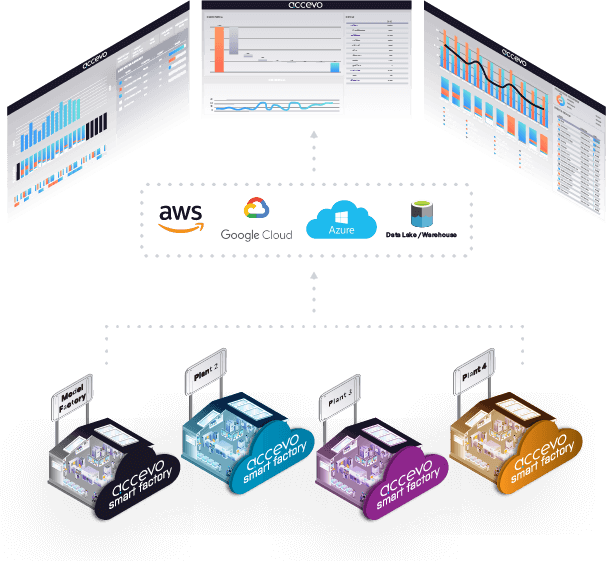
A cloud-based MES solution typically includes a web-based user interface, a database, and application servers. The web-based user interface provides users with access to the MES solution from any location with an internet connection. The database stores data about the manufacturing process, such as recipes, production schedules, and product data. The application servers host the MES software and provide the processing power for the solution.
基于云的MES,混合型或预制型,有什么区别?
Cloud-based MES or on-premise, what are the differences?
There are many differences between on-premise and cloud-based MES solutions. One of the biggest differences is that on-premise solutions are typically more expensive to implement and maintain than cloud-based solutions. On-premise solutions also require more IT infrastructure and support than cloud-based solutions. Cloud-based solutions are typically easier to implement and require less IT support. Another difference is that on-premise solutions are usually more customizable than cloud-based solutions. On-premise solutions can also be more difficult to upgrade than cloud-based solutions.
Which is better for your business?
The best answer for this question depends on the specific needs of your business. If you have a large budget and the need for a lot of customization, an on-premise MES solution may be a better option. If you have limited resources and the need for a less complex solution, a cloud-based MES solution may be a better option.
What about hybrid MES architecture?
A cloud hybrid model architecture is a combination of on-premises, private cloud, and public cloud services. This type of architecture allows organizations to use a mix of different cloud deployment models to optimize their operations and meet their specific business needs. With a cloud hybrid model, organizations can keep some data and applications on-premises for security and compliance reasons, while also leveraging the benefits of the public cloud, such as scalability and flexibility. This approach allows organizations to take advantage of the best of both worlds and create a more flexible and scalable IT environment.
MES functionality is increasingly moving to the cloud. ~46% of manufacturers have or are considering cloud MESAccording to a 2018 AWS / IDC survey of German and American MES users
生产环境中的云计算
有什么好处和坏处?
Cloud-based MES solutions have many benefits, including lower upfront costs, lower IT support costs, and easier implementation. However, cloud-based solutions can be less customizable than on-premise solutions and may be more difficult to upgrade. Find out what solution suits your business best by contacting us today.
Benefits
-
可扩展性
能够连接无限数量的生产线、设备和工厂--按需提供新资源--缓解不断增长的资源需求 -
无障碍设施
在任何时间、任何地点都能轻松访问实时操作数据。操作员可以从任何生产设施、工厂管理的任何地方访问应用程序 -
敏捷性和灵活性
当涉及到增加或减少操作规模时,敏捷的适应性资源分配。当生产量增加,MES必须快速和容易地扩展时,这一点很重要。 -
更好地利用IT资源
易于部署,不需要硬件或网络基础设施,也不需要IT团队的参与。一旦部署,MES不需要昂贵的升级、服务器维护或频繁的监督。 -
额外的云服务
有各种不同的云服务,可以作为MES系统的扩展--BI、AI和报告。添加新的服务只是一个配置工作 -
提高安全性
标准的高级别安全,软件维护和安全由云供应商更新。然而,对于一个内部的MES,安全是昂贵的,需要定期更新。 -
高可用性
有可能在没有大量投资成本的情况下提高可用性和冗余度
Drawbacks
-
高延迟
考虑使用云MES的公司必须检查云服务器所在国家或地区与工厂之间的位置。MES服务器与你的工厂之间的网络连接。最后,在你的MES之间传输的数据量。在失去连接的情况下,必须安装内部缓冲器来存储生产数据。 -
灵活性有限
虽然云MES有很多好处,但其中一个缺点是它的灵活性可能不如内部MES。这是因为云端MES通常以软件即服务(SaaS)的方式提供,这意味着它的定制化选项有限。如果你需要一个高度可定制的MES解决方案,内部解决方案可能是一个更好的选择。 -
有争议的数据所有权
基于云的MES解决方案的潜在缺点之一是,MES解决方案产生的数据可能由MES供应商拥有。如果你想更换MES供应商,或者你想保留数据用于内部用途,这可能是一个问题。在选择解决方案之前,请确保向MES供应商了解谁拥有这些数据。 -
可能的高成本
基于云的MES解决方案可能会很快变得比内部解决方案更昂贵。这是因为基于云的解决方案通常是按数据使用量和处理能力来定价的,而处理能力是以虚拟基础设施和支持来计算的。如果你正在考虑使用基于云的MES解决方案,请务必获得一份定制的报价,以确定该解决方案在不同情况下的真实成本。
Cloud means a new approach to development – DevOps
Cloud-based MES solutions require a new approach to development, called DevOps. DevOps is a set of practices that combines software development and IT operations to deliver applications and services faster. DevOps is essential for cloud-based MES solutions because of the need to rapidly develop and deploy new features and updates.
Cloud means new methodology – DevOps approach:
- Adopt cloud-native tools and practices
- Managed services over self-maintenance
- Re-architect toward adoption of new concepts
- Achieve self-healing capabilities
- SDLC (Software Development Life Cycle) for managing different environments and automating migration between environment
The goal for using the new methodology is:
- Automation of deployment and quality assurance (Automated upgrades and installation process)
- CI/CD – continuous integration and delivery
- Automated provisioning of infrastructure and its scalability (IaaS)
- Usage of cloud-native tools for performance monitoring, logging, security, code scanning, audits, etc.
- Automated testing (unit and end-2-end) as part of SDLC
云中生产数据的安全--要注意什么?
One of the biggest concerns with cloud-based MES solutions is the security of production data. Production data is often sensitive and confidential, so it is important to choose a MES solution that has strong security features. Look for a solution that offers user authentication, data encryption, and access control.

Modern approach to SLA – split of responsibility:
Responsibilities:
- The cloud service provider takes responsibility for everything that is happening in the Cloud.
- The customer is responsible for providing internet service and performing maintenance tasks on connectivity infrastructure and Edge devices.
Disaster Recovery:
- All data is periodically backup up in the Cloud using Recovery Services.
- Data redundancy should be set on Zone level which prevents loss of any data at twelve nines, but backups are still performed to have a way to recover from Accevo data corruption or deletion caused by a bug or other destructive behaviors of the systems and its users.
- The server itself should be automatically recreated on another Node when the cluster self-heals. In an extreme case of cluster failure, a new cluster from CI/CD should be created and the service will be deployed.
工厂中的云解决方案--它的成本是多少?
The cost of a cloud-based MES solution depends on many factors, such as the number of users, the number of production lines, and the level of customization. Contact us today to get a customized quote for your business.

Thanks to our solution called “push interface,” we are able to transfer data from the MES Accevo system to a ready-made data warehouse or create one for the client themselves. This enables analysts in a manufacturing company to synthesize and retrieve data from multiple sources into PowerBI and create custom charts for analyzing the factory’s situation. For example, an overview of the factory, start analysis, MTBF analysis, quality analysis, or waste analysis. Accevo has the capability to integrate with multiple database solution providers such as Azure Synapse or Snowflake for data processing and analysis in the cloud. Snowflake can be configured on any cloud infrastructure.
The process we utilize is ETL: Push (Extract) -> Store Raw Data (Transform) -> Apply to Data Warehouse (Load).
利用 PowerBi 使用多种来源的数据
用Accevo为你的工厂获得云MES
Accevo is a leading provider of cloud-based MES solutions. Our solutions are designed to help manufacturers optimize their production processes and improve their bottom line. Contact us today to learn more about our solutions and get a free demo.
订阅我们的通讯
相关产品