Lösungen für die Transformation von Fabriken

Digitale Transformation in der Fertigung. Beginnen Sie Ihre Reise mit Ihrem Projekt zur digitalen Transformation.

Was ist der digitale Wandel in der Fertigung?

Digital transformation in manufacturing is a revolutionary shift in the way the industry functions, emphasizing the use of digital technologies to modify and improve traditional manufacturing processes and systems. At its core, digital transformation is not just about transferring analogue documentation into computerized forms but about leveraging technology to achieve operational excellence, efficiency, and improved decision-making.

A prime example of this transformation is the Accevo system, which digitizes the entire spectrum of production processes. From initially downloading data directly from machines to analyzing this data, reporting relevant information, and executing production plans with peak efficiency, digital transformation ensures a seamless flow of information and operations.

DG-Diagramm 1a@4x 1
Die digitale Transformation in der Produktion gewinnt an Dynamik. Quelle: McKinsey-Studie auf der Grundlage von 400 globalen Fertigungsunternehmen.
Welche Branchen können von der digitalen Transformation der Fabriken profitieren?

Factory digital transformation isn’t confined to just one or two industries. Its principles and technologies can be applied across various sectors, leading to enhanced efficiencies, reduced costs, and improved product qualities. Here are some industries that can significantly benefit from factory digital transformation:

dt automotive

Automotive

Digitale Technologien können Montagelinien optimieren, Design- und Testprozesse verbessern und eine vorausschauende Wartung in Automobilwerken ermöglichen. Außerdem können sie die Entwicklung vernetzter Autos und die Integration von KI-gesteuerten Funktionen erleichtern.


dt aerospace

Luft- und Raumfahrt sowie Verteidigung

Angesichts des Bedarfs an Präzision und der hohen Kosten von Fehlern kann die Luft- und Raumfahrt- sowie die Verteidigungsindustrie von digitalen Verfahren zur Verbesserung von Design, Simulation, Prototyping und Produktion profitieren.

dt Strom

Elektronik- und Halbleiterindustrie

Angesichts des rasanten Innovationstempos und des hohen Produktionsvolumens kann die digitale Transformation in dieser Branche effiziente Prozesse in den Bereichen Design, Prototyping, Montage und Qualitätskontrolle fördern.

dt Lebensmittel und Getränke

FMCG

Vom Bauernhof bis auf den Tisch können digitale Lösungen die Lieferketten optimieren, Lebensmittelverarbeitungsmethoden verbessern und strenge Qualitätskontrollen gewährleisten.

dt pharma

Pharmaindustrie
& Biotechnologie

Die digitale Transformation kann die Prozesse der Arzneimittelentwicklung, -produktion und -qualitätskontrolle verbessern. Auch die Rückverfolgbarkeit und die Einhaltung von Vorschriften, die in dieser Branche von entscheidender Bedeutung sind, lassen sich mit digitalen Lösungen effizient verwalten.

dt Schwerindustrie

Schwere Industriezweige

Diese Branchen können die digitale Transformation für ein besseres Design, verbesserte Produktionsmethoden, eine vorausschauende Wartung und eine Verlängerung der Lebensdauer von Maschinen nutzen.

Was sind die Vorteile und Herausforderungen der digitalen Transformation in der Fertigung?

  1. Operational Efficiency: Streamlined processes, automation, and real-time data analytics lead to optimized production cycles, reduced downtime, and faster time-to-market.

  2. Reduced Costs: Predictive maintenance, resource optimization, and waste reduction can significantly lower operational costs.

  3. Improved Product Quality: Enhanced monitoring and feedback mechanisms ensure higher product quality and reduced defects.

  4. Better Decision Making: With data-driven insights, manufacturers can make informed decisions rapidly, adapting to changes in market demand or supply chain disruptions.

  5. Increased Flexibility and Customization: Advanced manufacturing technologies allow for more flexible production lines, enabling customization at a scale that was previously not feasible.

  6. Enhanced Supply Chain Management: Real-time visibility into the supply chain enables better inventory management, demand forecasting, and supplier relationship management.

  7. Reduced Environmental Impact: Efficient resource utilization and waste reduction can lead to a smaller carbon footprint.

  8. Improved Safety: Advanced sensors and monitoring systems can predict and prevent accidents, enhancing workplace safety.

  9. Competitive Advantage: Early adopters of digital transformation can gain a significant edge over competitors in terms of innovation, efficiency, and customer satisfaction.

  10. Enhanced Customer Experience: Digital tools can provide better customer insights, allowing manufacturers to tailor products more closely to consumer needs and preferences.

Challenges of Digital Transformation in Manufacturing:

  1. High Initial Investment: Implementing new technologies and systems can require substantial upfront costs.

  2. Skills Gap: The workforce may lack the necessary skills to work with advanced digital tools, necessitating training and reskilling.

  3. Resistance to Change: Employees accustomed to traditional manufacturing practices might resist or be wary of digital transformation efforts.

  4. Cybersecurity Risks: As operations become more interconnected, they become more vulnerable to cyber threats, necessitating robust security measures.

  5. Integration Issues: Integrating new digital tools with legacy systems can be complex and may lead to operational disruptions.

  6. Data Overload: Managing vast amounts of data generated by digital operations can be overwhelming and may require advanced data analytics capabilities.

  7. Reliability Concerns: Over-reliance on digital systems can pose challenges if there are technical glitches or system failures.

  8. Regulatory and Compliance Issues: Digital transformation can introduce new regulatory challenges, especially in industries like pharmaceuticals or aerospace.

  9. Rapid Technological Changes: The pace at which technology evolves can make it challenging to choose the right solutions and ensure that they remain relevant for a reasonable time.

  10. Supply Chain Disruptions: Over-reliance on specific technologies or suppliers can lead to vulnerabilities in the supply chain, especially if there are global disruptions.

Digitale Transformation zahlt sich aus

DG-Diagramm 2a@4x
Bei 150 Unternehmen aus verschiedenen Branchen wurde festgestellt, dass das Umsatzwachstum und die durchschnittliche jährliche Wachstumsrate bei den Spitzenreitern (oberstes Quartil) in Bezug auf die Technologieintensität mehr als doppelt so hoch waren wie bei den Schlusslichtern (unterstes Quartil). Quelle: HBR Mai-Juni 2022

89% der Manager sind der Meinung, dass die Digitalisierung der Fabrik mehrere Vorteile für die Produktion mit sich bringt

89%

Operational efficiency and better decision-making were the two most frequently cited factors.

Warum scheitert die Digitalisierung von Produktionsanlagen?

The failure of digitisation of production plants can be attributed to several factors, including the lack of clear objectives, inadequate training and onboarding of personnel, and inadequate MES systems. Poorly planned and implemented MES systems can cause problems with data accuracy, data reliability, and lack of scalability. Additionally, a lack of proper change management can lead to resistance to digital transformation or multiple independent initiatives introduced by different departments. This results in a lack of integration, and system interoperability, ultimately leading to the failure of digitisation of production plants.  

MES acts as the core of plant digitalisation progress, because clearly indicated OEE losses in the process, defining where should we focus our attention.

microstops-web@4x

Für welches System sollte ich mich entscheiden, um die digitale Transformation meines Unternehmens zu beginnen?

Starting a factory digital transformation is a significant decision that requires careful consideration of various systems and solutions. The right choice depends on your specific needs, existing infrastructure, budget, and long-term goals. Here are some systems and platforms commonly used to kickstart digital transformation in manufacturing:

  1. Enterprise Resource Planning (ERP) Systems: ERPs integrate various business processes into a single unified system. Popular solutions include SAP, Oracle, and Microsoft Dynamics. They can help streamline processes, enhance visibility, and improve decision-making across the enterprise.

  2. Manufacturing Execution Systems (MES): These systems focus on tracking and documenting the transformation of raw materials to finished goods. MES solutions like Accevo can improve production output, quality, and consistency.

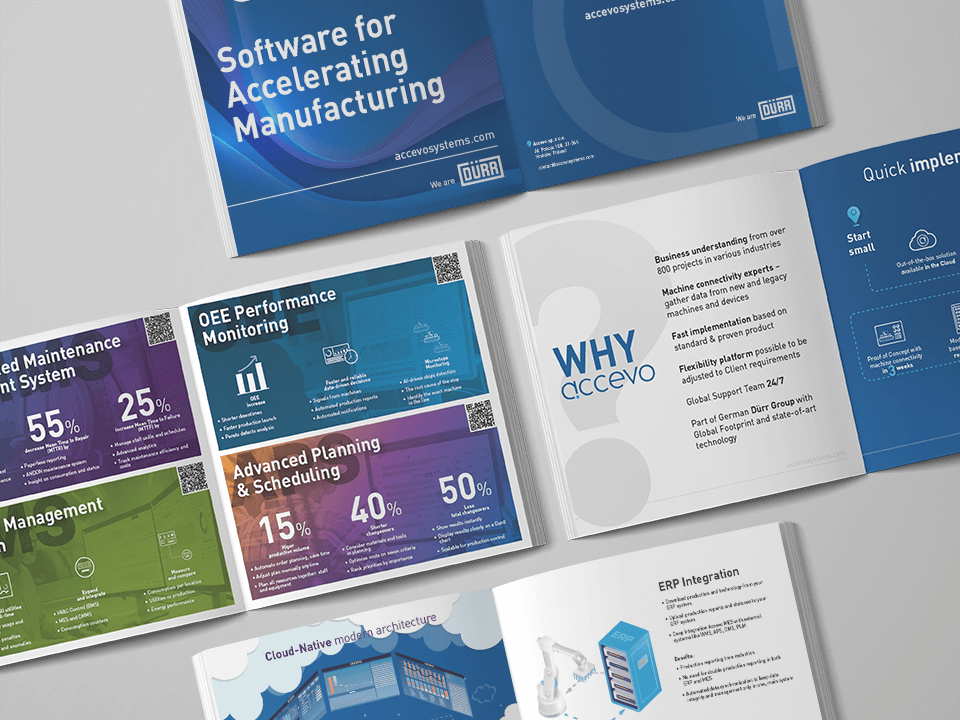
Produktkatalog

  • Get a complete catalogue of Accevo products
  • Read how Accevo can help your company to grow
  • Share the catalogue with your colleagues and co-workers 

Welche Lieferungen sollte ich mir sichern, um meine digitale Transformation in der Fabrik zu beginnen?

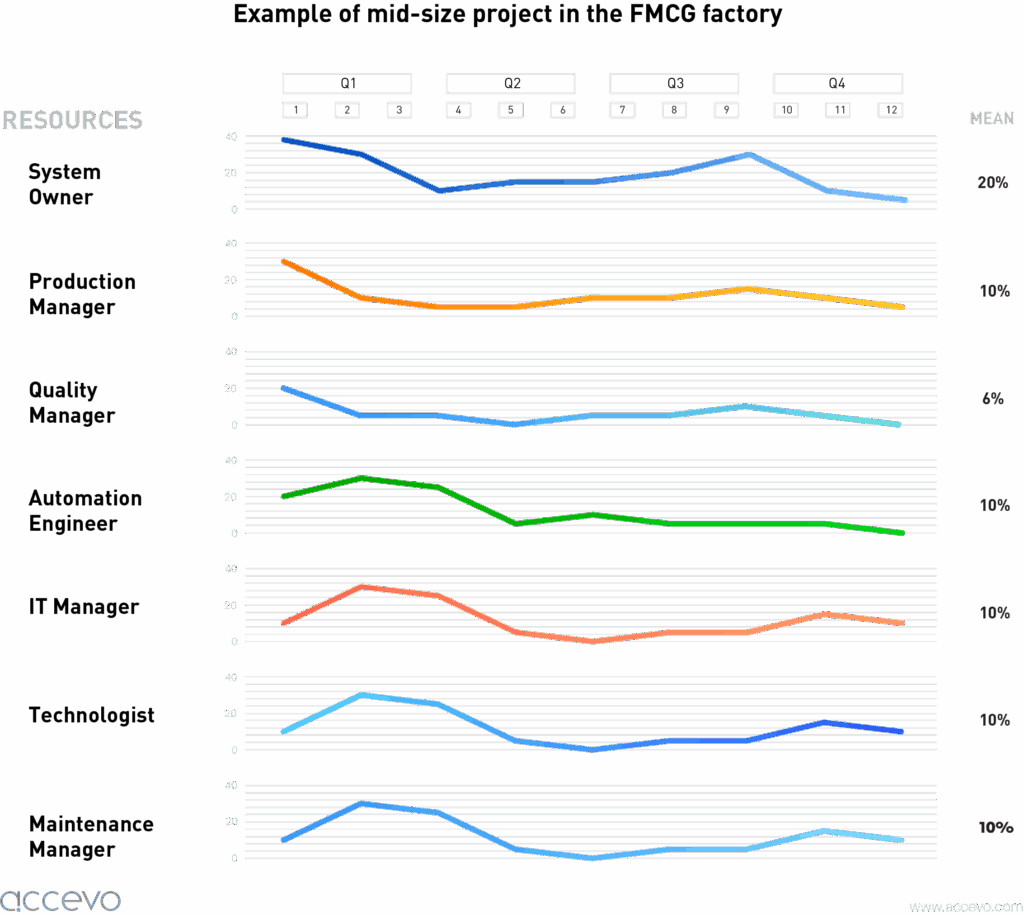
Depending on the scale of the project and the type of solutions being implemented, the digitalisation project may require mobilizing human resources with a variety of profiles, including technical and quality specialists, technologists and managers. Additionally, the digitalization team may require project management specialists to ensure that human resources are used effectively and the project is kept under control. 

DG-Diagramm FMCG@4x

Um ein schnelles Angebot zu erhalten, muss Accevo Team wissen:

• What system from our portfolio suits you the most? 

• Briefly describe your production process, include production input and output. 

• Number of lines and machines (workstations). 

• What systems would you like to integrate with? 

• Describe IT hardware available in the plant.

• What system architecture? On-premise or Cloud.

• How many facilities your company plans to digitalise?

Melden Sie sich für unseren Newsletter an

Wie starten Sie mit der Digitalisierung Ihrer Produktion? Der Fahrplan.

If your factory is a greenfield project try to follow up these steps to ensure that your factory will benefit from the digitalisation project. Start small and scale fast as your expertise and requirements grow.­

1.

Create a wired network through your factory or look for a complete solution provider like Accevo that will do it for you. 

2.

Connect all machines and start collecting data. Calculate your OEE from day one.

3.

Use production software to analyse data and count OEE

  • Identify gaps and shortcomings to increase your OEE
  • Make your production more efficient
  • Understand what the production progress is

4.

Grow your manufacturing systems and add an additional module to build up a fully functional MES – Integrate with existing ERP to get streamlined data flow across the entire facility. 

MES with Material validation + Traceability + Quality inspections

5.

Use Advanced Planning and Scheduling System to produce on time in the spirit of lean manufacturing. 

6.

Expand your system with advanced maintenance management (CMMS) software. 

7.

Link your Warehouse with WMS to fully manage your stockpiles and deliveries. 

Notify logistics to deliver materials on time right to the shopfloor. 

8.

Fully digitalise your production with a Paperless module and workflow builder.

9.

Combine your production with energy usage and use the EMS system to analyse production cost in relation to consumed energy and other utilities to save resources. 

Projektzeitplan​

Dank bewährter Umsetzungsmethoden können Sie sicher sein, dass alles im Zeitplan bleibt!

aps web@4x

Was sollte bei der Suche nach einem Partner für die digitale Transformation von Fabriken beachtet werden?

Bedürfnisse anderer

Verstehen Sie Ihre Bedürfnisse:

  • Identify specific business needs and challenges.
  • Evaluate the scale and complexity of your operations.
andere Funktionen

Merkmale und Funktionsweise:

  • List down the features and functionalities essential for your operations.
  • Ensure that the software can be customised to fit your specific needs.
andere Budget

Haushalt:


  • Consider the initial implementation and ongoing maintenance costs.
  • Evaluate the return on investment.
Ruf anderer

Ruf des Anbieters:


  • Research the vendor’s reputation and track record.
  • Consider testimonials and reviews from other users.
Sicherheit anderer

Sicherheit und Unterstützung:

  • Ensure that the software adheres to industry-standard security protocols.
  • Confirm that the vendor offers reliable support and maintenance services.

Langfristige Sicherung der Widerstandsfähigkeit und Wettbewerbsfähigkeit: Warum sollten Sie Accevo als Lösungsanbieter wählen?

mc

Führende Konnektivitätslösungen für Maschinen

dt-Software

Unabhängiger Software-Anbieter

dt-Anpassung

Beweglichkeit, Flexibilität und Änderungen

dt – schnelle Umsetzung

Schnelle Implementierung

dt weniger Fehler

Verschiedene Produkte in einer einzigen skalierbaren Plattform. Integration mit allen bestehenden Systemen

dt-Genauigkeit

Geschäftliches Know-how und technische Kenntnisse

Starten Sie Ihr Projekt zur digitalen Transformation

Kontakt mit unserem Experten

www Mitarbeiter Marcin Marczewski

Marcin Marczewski

Industrial Software Expert

LinkedIn

Warum eine Demo anfordern?

  • A 60-minute online meeting with a dedicated specialist presenting a top system from an industry similar to yours
  • Live modeling of your production process
  • A budget quotation after the meeting

Mehr Einblicke erhalten

Hallo, anscheinend sind Sie an Software für die Produktion interessiert...

Abonnieren Sie unseren Newsletter und Sie erhalten unsere Broschüre.

By providing your email and clicking the “Download a catalogue” button, you agree to receive our newsletter.

Melden Sie sich für unseren Newsletter an und laden Sie einen Musterprojektplan herunter

Attention: Please provide your Work Email, emails from popular domains like (gmail, yahoo etc.) will be automatically filtered and won’t receive the Sample Project Plan

Wonach suchen Sie?