





¿Cómo crear una estrategia de desarrollo de una fábrica digital?
Evalúe su nivel actual de digitalización: Esto es importante porque le ayudará a determinar qué áreas necesitan más mejoras y cuánto trabajo necesita

Digital transformation in manufacturing is a revolutionary shift in the way the industry functions, emphasizing the use of digital technologies to modify and improve traditional manufacturing processes and systems. At its core, digital transformation is not just about transferring analogue documentation into computerized forms but about leveraging technology to achieve operational excellence, efficiency, and improved decision-making.
A prime example of this transformation is the Accevo system, which digitizes the entire spectrum of production processes. From initially downloading data directly from machines to analyzing this data, reporting relevant information, and executing production plans with peak efficiency, digital transformation ensures a seamless flow of information and operations.
Factory digital transformation isn’t confined to just one or two industries. Its principles and technologies can be applied across various sectors, leading to enhanced efficiencies, reduced costs, and improved product qualities. Here are some industries that can significantly benefit from factory digital transformation:

Las tecnologías digitales pueden optimizar las líneas de montaje, mejorar los procesos de diseño y ensayo, y permitir el mantenimiento predictivo en las plantas de fabricación de automóviles. Además, pueden facilitar la creación de coches conectados y la integración de funciones basadas en la inteligencia artificial.

Dada la necesidad de precisión y el elevado coste que suponen los errores, el sector aeroespacial y de defensa puede beneficiarse de los procesos digitales para mejorar el diseño, la simulación, la creación de prototipos y la producción.

Dado el rápido ritmo de innovación y el elevado volumen de producción, la transformación digital puede impulsar procesos eficientes de diseño, creación de prototipos, montaje y control de calidad en este sector.

Desde la granja hasta la mesa, las soluciones digitales pueden optimizar las cadenas de suministro, mejorar los métodos de procesamiento de alimentos y garantizar controles de calidad rigurosos.

La transformación digital puede mejorar los procesos de descubrimiento de fármacos, producción y control de calidad. La trazabilidad y el cumplimiento normativo, aspectos fundamentales en este sector, también pueden gestionarse de forma eficaz mediante soluciones digitales.

Estos sectores pueden aprovechar la transformación digital para mejorar el diseño, optimizar los métodos de producción, aplicar el mantenimiento predictivo y prolongar la vida útil de la maquinaria.
Operational Efficiency: Streamlined processes, automation, and real-time data analytics lead to optimized production cycles, reduced downtime, and faster time-to-market.
Reduced Costs: Predictive maintenance, resource optimization, and waste reduction can significantly lower operational costs.
Improved Product Quality: Enhanced monitoring and feedback mechanisms ensure higher product quality and reduced defects.
Better Decision Making: With data-driven insights, manufacturers can make informed decisions rapidly, adapting to changes in market demand or supply chain disruptions.
Increased Flexibility and Customization: Advanced manufacturing technologies allow for more flexible production lines, enabling customization at a scale that was previously not feasible.
Enhanced Supply Chain Management: Real-time visibility into the supply chain enables better inventory management, demand forecasting, and supplier relationship management.
Reduced Environmental Impact: Efficient resource utilization and waste reduction can lead to a smaller carbon footprint.
Improved Safety: Advanced sensors and monitoring systems can predict and prevent accidents, enhancing workplace safety.
Competitive Advantage: Early adopters of digital transformation can gain a significant edge over competitors in terms of innovation, efficiency, and customer satisfaction.
Enhanced Customer Experience: Digital tools can provide better customer insights, allowing manufacturers to tailor products more closely to consumer needs and preferences.
Challenges of Digital Transformation in Manufacturing:
High Initial Investment: Implementing new technologies and systems can require substantial upfront costs.
Skills Gap: The workforce may lack the necessary skills to work with advanced digital tools, necessitating training and reskilling.
Resistance to Change: Employees accustomed to traditional manufacturing practices might resist or be wary of digital transformation efforts.
Cybersecurity Risks: As operations become more interconnected, they become more vulnerable to cyber threats, necessitating robust security measures.
Integration Issues: Integrating new digital tools with legacy systems can be complex and may lead to operational disruptions.
Data Overload: Managing vast amounts of data generated by digital operations can be overwhelming and may require advanced data analytics capabilities.
Reliability Concerns: Over-reliance on digital systems can pose challenges if there are technical glitches or system failures.
Regulatory and Compliance Issues: Digital transformation can introduce new regulatory challenges, especially in industries like pharmaceuticals or aerospace.
Rapid Technological Changes: The pace at which technology evolves can make it challenging to choose the right solutions and ensure that they remain relevant for a reasonable time.
Supply Chain Disruptions: Over-reliance on specific technologies or suppliers can lead to vulnerabilities in the supply chain, especially if there are global disruptions.
Operational efficiency and better decision-making were the two most frequently cited factors.
The failure of digitisation of production plants can be attributed to several factors, including the lack of clear objectives, inadequate training and onboarding of personnel, and inadequate MES systems. Poorly planned and implemented MES systems can cause problems with data accuracy, data reliability, and lack of scalability. Additionally, a lack of proper change management can lead to resistance to digital transformation or multiple independent initiatives introduced by different departments. This results in a lack of integration, and system interoperability, ultimately leading to the failure of digitisation of production plants.
MES acts as the core of plant digitalisation progress, because clearly indicated OEE losses in the process, defining where should we focus our attention.
Read our article:
Starting a factory digital transformation is a significant decision that requires careful consideration of various systems and solutions. The right choice depends on your specific needs, existing infrastructure, budget, and long-term goals. Here are some systems and platforms commonly used to kickstart digital transformation in manufacturing:
Enterprise Resource Planning (ERP) Systems: ERPs integrate various business processes into a single unified system. Popular solutions include SAP, Oracle, and Microsoft Dynamics. They can help streamline processes, enhance visibility, and improve decision-making across the enterprise.
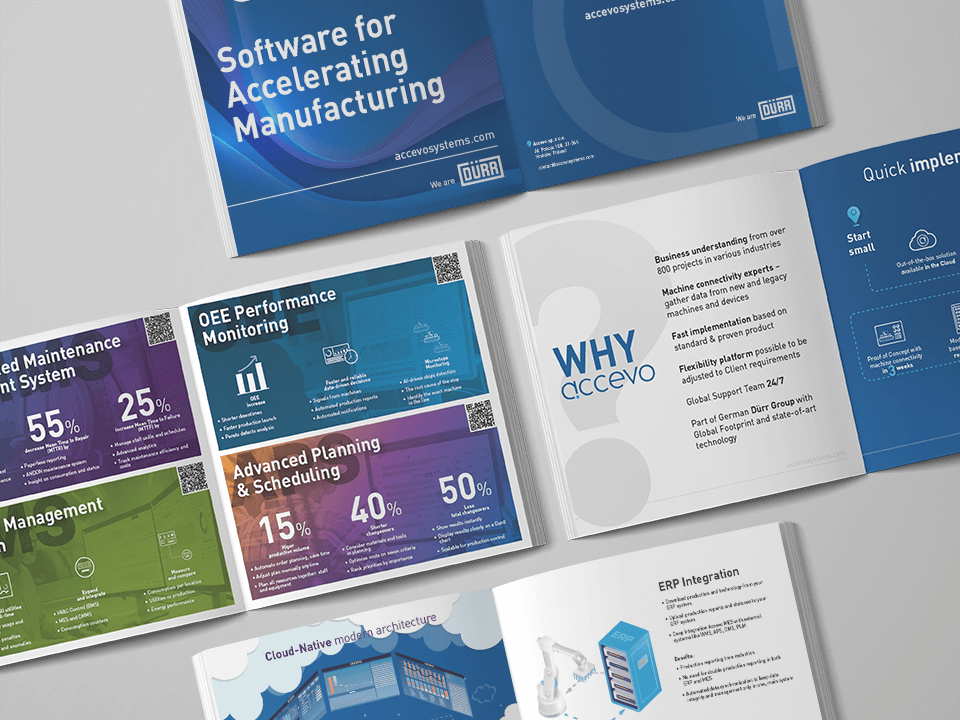
Manufacturing Execution Systems (MES): These systems focus on tracking and documenting the transformation of raw materials to finished goods. MES solutions like Accevo can improve production output, quality, and consistency.
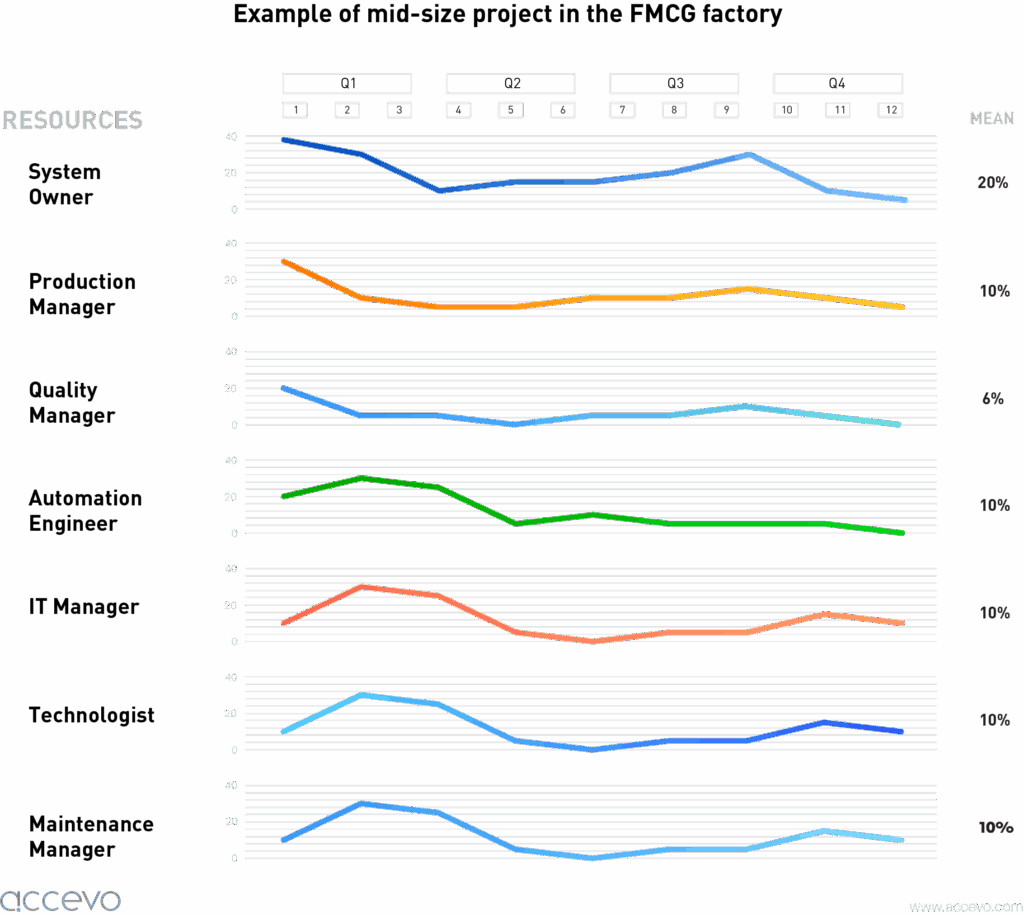
Depending on the scale of the project and the type of solutions being implemented, the digitalisation project may require mobilizing human resources with a variety of profiles, including technical and quality specialists, technologists and managers. Additionally, the digitalization team may require project management specialists to ensure that human resources are used effectively and the project is kept under control.
• What system from our portfolio suits you the most?
• Briefly describe your production process, include production input and output.
• Number of lines and machines (workstations).
• What systems would you like to integrate with?
• Describe IT hardware available in the plant.
• What system architecture? On-premise or Cloud.
• How many facilities your company plans to digitalise?
Create a wired network through your factory or look for a complete solution provider like Accevo that will do it for you.
Connect all machines and start collecting data. Calculate your OEE from day one.
Use production software to analyse data and count OEE
Grow your manufacturing systems and add an additional module to build up a fully functional MES – Integrate with existing ERP to get streamlined data flow across the entire facility.
MES with Material validation + Traceability + Quality inspections
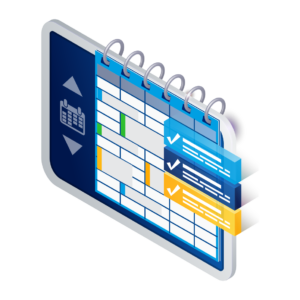
Use Advanced Planning and Scheduling System to produce on time in the spirit of lean manufacturing.
Expand your system with advanced maintenance management (CMMS) software.
Link your Warehouse with WMS to fully manage your stockpiles and deliveries.
Notify logistics to deliver materials on time right to the shopfloor.
Fully digitalise your production with a Paperless module and workflow builder.
Combine your production with energy usage and use the EMS system to analyse production cost in relation to consumed energy and other utilities to save resources.

Evalúe su nivel actual de digitalización: Esto es importante porque le ayudará a determinar qué áreas necesitan más mejoras y cuánto trabajo necesita


La fábrica inteligente cumple los objetivos de la Industria 4.0 mediante la trazabilidad y la comunicabilidad de los objetos, la conexión en red de máquinas y equipos, así como
La fabricación ajustada es un proceso de producción basado en el concepto de maximizar la productividad y minimizar los residuos en la fabricación. En el transcurso de este

By providing your email and clicking the “Download a catalogue” button, you agree to receive our newsletter.
Attention: Please provide your Work Email, emails from popular domains like (gmail, yahoo etc.) will be automatically filtered and won’t receive the Sample Project Plan