







Cloud-Herstellung
Ein sicherer Ort für alle Ihre Produktionsdaten
Was ist Cloud Manufacturing?
Cloud manufacturing is the application of cloud computing in manufacturing. It enables manufacturers to connect, share, and manage data and resources using the Internet. The concept of cloud manufacturing was proposed as a way to apply cloud computing to the global manufacturing industry. It can improve manufacturing efficiency and flexibility, and reduce costs.
Cloud MES is driving new opportunities:
- Horizontal integration of suppliers across the value chain
- Cloud-based MES solutions can help to improve horizontal integration across the supply chain. This is because cloud-based solutions can provide visibility into the manufacturing process from end to end. This visibility can help to identify bottlenecks and optimize the manufacturing process.
- Tracking carbon emissions
- Cloud-based MES solutions can help factories track their carbon emissions. By tracking production data, such as energy use, in the cloud, factories can identify opportunities to reduce their emissions. Additionally, cloud-based MES solutions can help factories track their progress towards emissions reduction goals.
- Seamless mergers and acquisitions
- Cloud-based MES solutions can help factories seamlessly merge with or acquire other factories. By tracking production data in the cloud, factories can easily share data between factories. Additionally, cloud-based MES solutions can help factories keep track of production schedules and recipes, making it easy to transition to a new factory.
- Dynamic production scheduling
- Cloud-based MES solutions can help factories dynamically schedule production. By tracking production data in the cloud, factories can quickly identify changes in demand and adjust production accordingly. Additionally, cloud-based MES solutions can help factories automatically generate production schedules based on customer orders.
- Development of new services
- Cloud-based MES solutions can help factories develop new services. By tracking production data in the cloud, factories can quickly identify opportunities to develop new requirements for services which can improve their production. Additionally, cloud-based MES solutions can help factories track customer demand for new services.
Architektur von Cloud-Lösungen - wie sieht sie aus?
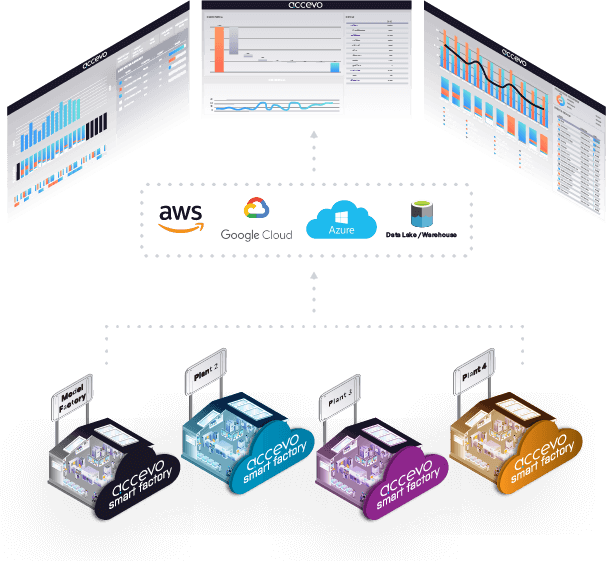
A cloud-based MES solution typically includes a web-based user interface, a database, and application servers. The web-based user interface provides users with access to the MES solution from any location with an internet connection. The database stores data about the manufacturing process, such as recipes, production schedules, and product data. The application servers host the MES software and provide the processing power for the solution.
Cloud-basiertes MES, hybrid oder vor Ort, was sind die Unterschiede?
Cloud-based MES or on-premise, what are the differences?
There are many differences between on-premise and cloud-based MES solutions. One of the biggest differences is that on-premise solutions are typically more expensive to implement and maintain than cloud-based solutions. On-premise solutions also require more IT infrastructure and support than cloud-based solutions. Cloud-based solutions are typically easier to implement and require less IT support. Another difference is that on-premise solutions are usually more customizable than cloud-based solutions. On-premise solutions can also be more difficult to upgrade than cloud-based solutions.
Which is better for your business?
The best answer for this question depends on the specific needs of your business. If you have a large budget and the need for a lot of customization, an on-premise MES solution may be a better option. If you have limited resources and the need for a less complex solution, a cloud-based MES solution may be a better option.
What about hybrid MES architecture?
A cloud hybrid model architecture is a combination of on-premises, private cloud, and public cloud services. This type of architecture allows organizations to use a mix of different cloud deployment models to optimize their operations and meet their specific business needs. With a cloud hybrid model, organizations can keep some data and applications on-premises for security and compliance reasons, while also leveraging the benefits of the public cloud, such as scalability and flexibility. This approach allows organizations to take advantage of the best of both worlds and create a more flexible and scalable IT environment.
MES functionality is increasingly moving to the cloud. ~46% of manufacturers have or are considering cloud MESAccording to a 2018 AWS / IDC survey of German and American MES users
Cloud in einer Produktionsumgebung
Was sind die Vor- und Nachteile?
Cloud-based MES solutions have many benefits, including lower upfront costs, lower IT support costs, and easier implementation. However, cloud-based solutions can be less customizable than on-premise solutions and may be more difficult to upgrade. Find out what solution suits your business best by contacting us today.
Benefits
-
Skalierbarkeit
Möglichkeit, eine unbegrenzte Anzahl von Produktionslinien, Ausrüstungen und Fabriken miteinander zu verbinden - neue Ressourcen bei Bedarf - Abfederung des wachsenden Ressourcenbedarfs -
Erreichbarkeit
Einfacher Zugriff auf Echtzeit-Betriebsdaten zu jeder Zeit und von jedem Ort aus. Bediener können von jeder Produktionsstätte aus auf Anwendungen zugreifen, das Fabrikmanagement von überall -
Beweglichkeit und Flexibilität
Agile, anpassungsfähige Ressourcenzuweisung, wenn es darum geht, den Umfang der Operationen zu vergrößern oder zu verkleinern. Dies ist wichtig, wenn die Produktion hochgefahren wird und das MES schnell und einfach skaliert werden muss. -
Bessere Nutzung von IT-Ressourcen
Einfach zu implementieren, da keine Hardware- oder Netzwerkinfrastruktur und kein Einsatz von IT-Teams erforderlich ist. Nach der Bereitstellung erfordert MES keine kostspieligen Upgrades, keine Serverwartung und keine häufige Überwachung. -
Zusätzliche Cloud-Dienste
Es gibt eine Vielzahl verschiedener Cloud-Dienste, die als Erweiterung des MES-Systems genutzt werden können - BI, KI und Reporting. Das Hinzufügen neuer Dienste ist nur ein Konfigurationsaufwand -
Verbesserte Sicherheit
Standardmäßige Sicherheit auf hohem Niveau, wobei die Softwarewartung und die Sicherheit durch den Cloud-Anbieter aktualisiert werden. Bei einem MES vor Ort ist die Sicherheit jedoch teuer und erfordert regelmäßige Updates -
Hohe Verfügbarkeit
Möglichkeit zur Erhöhung der Verfügbarkeit und Redundanz ohne erhebliche Investitionskosten
Drawbacks
-
Hohe Latenzzeit
Unternehmen, die Cloud-MES in Erwägung ziehen, müssen den Standort des Cloud-Servers im Land oder in der Region der Fabrik überprüfen. Und schließlich die Menge der Daten, die zwischen Ihren MES übertragen werden. Für den Fall, dass die Verbindung unterbrochen wird, muss ein interner Puffer installiert werden, um die Produktionsdaten zu speichern. -
Begrenzte Flexibilität
Cloud-MES hat zwar viele Vorteile, doch einer der Nachteile ist, dass es weniger flexibel sein kann als ein MES vor Ort. Das liegt daran, dass Cloud-MES in der Regel als Software-as-a-Service (SaaS)-Lösung bereitgestellt wird, was bedeutet, dass sie nur begrenzte Anpassungsmöglichkeiten bietet. Wenn Sie eine MES-Lösung benötigen, die in hohem Maße anpassbar ist, ist eine Vor-Ort-Lösung möglicherweise die bessere Wahl. -
Strittige Dateneigentümerschaft
Einer der potenziellen Nachteile von Cloud-basierten MES-Lösungen ist, dass die von der MES-Lösung erzeugten Daten möglicherweise Eigentum des MES-Anbieters sind. Dies kann ein Problem sein, wenn Sie den MES-Anbieter wechseln oder die Daten für interne Zwecke behalten möchten. Erkundigen Sie sich beim MES-Anbieter, wer Eigentümer der Daten ist, bevor Sie sich für eine Lösung entscheiden. -
Möglicherweise höhere Kosten
Cloud-basierte MES-Lösungen können schnell teurer werden als On-Premise-Lösungen. Das liegt daran, dass Cloud-basierte Lösungen in der Regel nach Datennutzung und Verarbeitungsleistung abgerechnet werden, die in die virtuelle Infrastruktur und den Support einfließen. Wenn Sie eine Cloud-basierte MES-Lösung in Betracht ziehen, sollten Sie unbedingt ein individuelles Angebot einholen, um die tatsächlichen Kosten der Lösung unter verschiedenen Umständen zu ermitteln
Cloud means a new approach to development – DevOps
Cloud-based MES solutions require a new approach to development, called DevOps. DevOps is a set of practices that combines software development and IT operations to deliver applications and services faster. DevOps is essential for cloud-based MES solutions because of the need to rapidly develop and deploy new features and updates.
Cloud means new methodology – DevOps approach:
- Adopt cloud-native tools and practices
- Managed services over self-maintenance
- Re-architect toward adoption of new concepts
- Achieve self-healing capabilities
- SDLC (Software Development Life Cycle) for managing different environments and automating migration between environment
The goal for using the new methodology is:
- Automation of deployment and quality assurance (Automated upgrades and installation process)
- CI/CD – continuous integration and delivery
- Automated provisioning of infrastructure and its scalability (IaaS)
- Usage of cloud-native tools for performance monitoring, logging, security, code scanning, audits, etc.
- Automated testing (unit and end-2-end) as part of SDLC
Sicherheit von Produktionsdaten in der Cloud - worauf ist zu achten?
One of the biggest concerns with cloud-based MES solutions is the security of production data. Production data is often sensitive and confidential, so it is important to choose a MES solution that has strong security features. Look for a solution that offers user authentication, data encryption, and access control.

Modern approach to SLA – split of responsibility:
Responsibilities:
- The cloud service provider takes responsibility for everything that is happening in the Cloud.
- The customer is responsible for providing internet service and performing maintenance tasks on connectivity infrastructure and Edge devices.
Disaster Recovery:
- All data is periodically backup up in the Cloud using Recovery Services.
- Data redundancy should be set on Zone level which prevents loss of any data at twelve nines, but backups are still performed to have a way to recover from Accevo data corruption or deletion caused by a bug or other destructive behaviors of the systems and its users.
- The server itself should be automatically recreated on another Node when the cluster self-heals. In an extreme case of cluster failure, a new cluster from CI/CD should be created and the service will be deployed.
Cloud-Lösungen in der Fabrik - wie viel kostet das?
The cost of a cloud-based MES solution depends on many factors, such as the number of users, the number of production lines, and the level of customization. Contact us today to get a customized quote for your business.
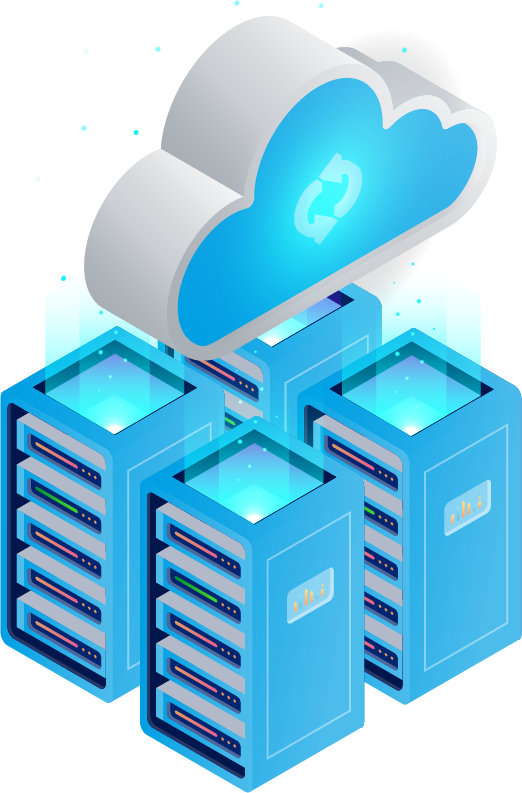

Thanks to our solution called “push interface,” we are able to transfer data from the MES Accevo system to a ready-made data warehouse or create one for the client themselves. This enables analysts in a manufacturing company to synthesize and retrieve data from multiple sources into PowerBI and create custom charts for analyzing the factory’s situation. For example, an overview of the factory, start analysis, MTBF analysis, quality analysis, or waste analysis. Accevo has the capability to integrate with multiple database solution providers such as Azure Synapse or Snowflake for data processing and analysis in the cloud. Snowflake can be configured on any cloud infrastructure.
The process we utilize is ETL: Push (Extract) -> Store Raw Data (Transform) -> Apply to Data Warehouse (Load).
Verwenden Sie mit PowerBi Daten aus mehreren Quellen
Holen Sie sich Cloud MES für Ihre Fabrik mit Accevo
Accevo is a leading provider of cloud-based MES solutions. Our solutions are designed to help manufacturers optimize their production processes and improve their bottom line. Contact us today to learn more about our solutions and get a free demo.
Melden Sie sich für unseren Newsletter an
Verwandte Produkte

Shopfloor-Lagerverwaltungssystem (Shopfloor WMS)
Lagerverwaltungssystem für die Fertigung (spWMS) Bestandsüberwachung für das Fertigungslager Demo vereinbaren Lagerverwaltungssystem für die Fertigung – verwalten Sie Ihr Lager effizient! Pflege

Erweiterte Planung und Disposition (APS)
Fortschrittliches Planungs- und Terminierungssystem (APS-Software) – Ihre Produktion, perfekt geplant. Das Accevo-APS-System ist ein spezialisiertes Softwaretool, das in Verbindung mit Ihrem ERP-System arbeitet, um
Energie -Überwachungs-system
Energiemanagementsystem (EMS) Überwachen Sie den Energieverbrauch in Echtzeit und senken Sie die Kosten. Vereinbaren Sie eine Demo. Was ist Accevo EMS? Das Accevo-Energiemanagementsystem (EMS) ist