







Fabricación en la nube
Un único lugar seguro para todos tus datos de producción
¿Qué es la fabricación en la nube?
Cloud manufacturing is the application of cloud computing in manufacturing. It enables manufacturers to connect, share, and manage data and resources using the Internet. The concept of cloud manufacturing was proposed as a way to apply cloud computing to the global manufacturing industry. It can improve manufacturing efficiency and flexibility, and reduce costs.
Cloud MES is driving new opportunities:
- Horizontal integration of suppliers across the value chain
- Cloud-based MES solutions can help to improve horizontal integration across the supply chain. This is because cloud-based solutions can provide visibility into the manufacturing process from end to end. This visibility can help to identify bottlenecks and optimize the manufacturing process.
- Tracking carbon emissions
- Cloud-based MES solutions can help factories track their carbon emissions. By tracking production data, such as energy use, in the cloud, factories can identify opportunities to reduce their emissions. Additionally, cloud-based MES solutions can help factories track their progress towards emissions reduction goals.
- Seamless mergers and acquisitions
- Cloud-based MES solutions can help factories seamlessly merge with or acquire other factories. By tracking production data in the cloud, factories can easily share data between factories. Additionally, cloud-based MES solutions can help factories keep track of production schedules and recipes, making it easy to transition to a new factory.
- Dynamic production scheduling
- Cloud-based MES solutions can help factories dynamically schedule production. By tracking production data in the cloud, factories can quickly identify changes in demand and adjust production accordingly. Additionally, cloud-based MES solutions can help factories automatically generate production schedules based on customer orders.
- Development of new services
- Cloud-based MES solutions can help factories develop new services. By tracking production data in the cloud, factories can quickly identify opportunities to develop new requirements for services which can improve their production. Additionally, cloud-based MES solutions can help factories track customer demand for new services.
Arquitectura de soluciones en la nube: ¿cómo es?
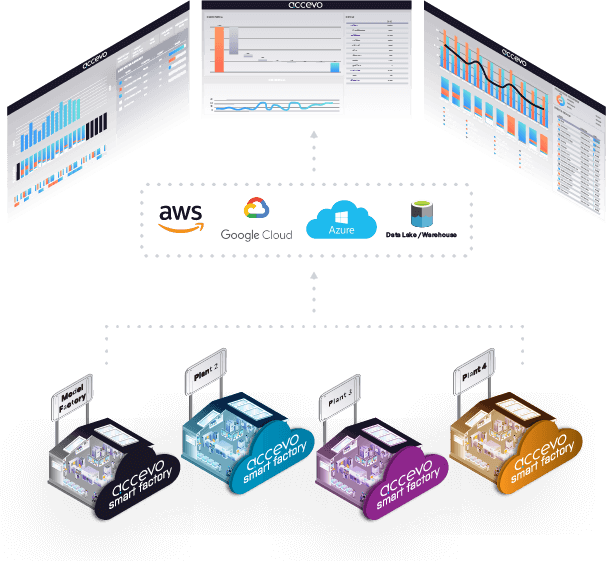
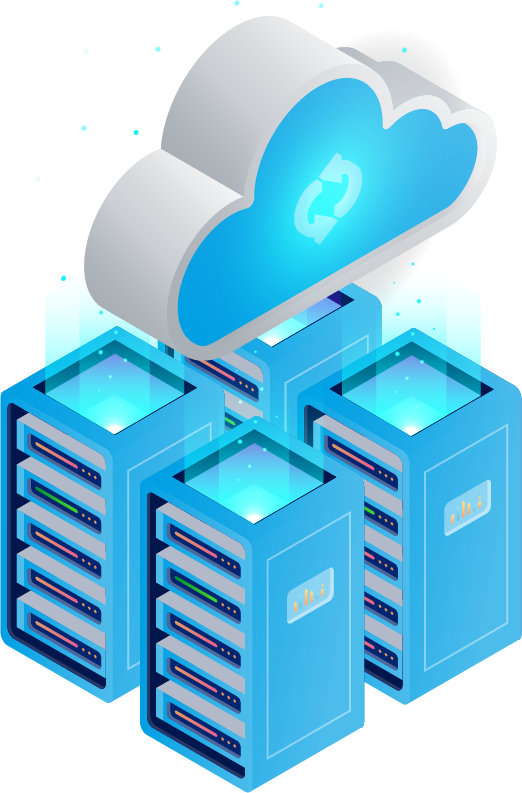
A cloud-based MES solution typically includes a web-based user interface, a database, and application servers. The web-based user interface provides users with access to the MES solution from any location with an internet connection. The database stores data about the manufacturing process, such as recipes, production schedules, and product data. The application servers host the MES software and provide the processing power for the solution.
MES basado en la nube, híbrido o local: ¿cuáles son las diferencias?
Cloud-based MES or on-premise, what are the differences?
There are many differences between on-premise and cloud-based MES solutions. One of the biggest differences is that on-premise solutions are typically more expensive to implement and maintain than cloud-based solutions. On-premise solutions also require more IT infrastructure and support than cloud-based solutions. Cloud-based solutions are typically easier to implement and require less IT support. Another difference is that on-premise solutions are usually more customizable than cloud-based solutions. On-premise solutions can also be more difficult to upgrade than cloud-based solutions.
Which is better for your business?
The best answer for this question depends on the specific needs of your business. If you have a large budget and the need for a lot of customization, an on-premise MES solution may be a better option. If you have limited resources and the need for a less complex solution, a cloud-based MES solution may be a better option.
What about hybrid MES architecture?
A cloud hybrid model architecture is a combination of on-premises, private cloud, and public cloud services. This type of architecture allows organizations to use a mix of different cloud deployment models to optimize their operations and meet their specific business needs. With a cloud hybrid model, organizations can keep some data and applications on-premises for security and compliance reasons, while also leveraging the benefits of the public cloud, such as scalability and flexibility. This approach allows organizations to take advantage of the best of both worlds and create a more flexible and scalable IT environment.
MES functionality is increasingly moving to the cloud. ~46% of manufacturers have or are considering cloud MESAccording to a 2018 AWS / IDC survey of German and American MES users
La nube en un entorno de producción
¿Cuáles son las ventajas y los inconvenientes?
Cloud-based MES solutions have many benefits, including lower upfront costs, lower IT support costs, and easier implementation. However, cloud-based solutions can be less customizable than on-premise solutions and may be more difficult to upgrade. Find out what solution suits your business best by contacting us today.
Benefits
-
Escalabilidad
Posibilidad de conectar un número ilimitado de líneas de producción, equipos y fábricas —nuevos recursos bajo demanda— para hacer frente a la creciente demanda de recursos -
Accesibilidad
Fácil acceso a datos operativos en tiempo real en cualquier momento y desde cualquier lugar. Los operadores pueden acceder a las aplicaciones desde cualquier planta de producción, y la dirección de la fábrica desde cualquier lugar. -
Agilidad y flexibilidad
Asignación ágil y flexible de recursos a la hora de ampliar o reducir el volumen de las operaciones. Esto resulta importante cuando la producción se intensifica y es necesario adaptar el MES de forma rápida y sencilla. -
Mejor uso de los recursos informáticos
Es fácil de implementar, ya que no requiere hardware ni infraestructura de red, ni la intervención de equipos de TI. Una vez implementado, el MES no requiere costosas actualizaciones, mantenimiento de servidores ni supervisión frecuente. -
Servicios adicionales en la nube
Existe una amplia variedad de servicios en la nube que pueden utilizarse como extensión del sistema MES: BI, IA y generación de informes. Añadir nuevos servicios solo requiere un pequeño esfuerzo de configuración. -
Mayor seguridad
Seguridad estándar de alto nivel, con el mantenimiento del software y las actualizaciones de seguridad a cargo del proveedor de servicios en la nube. Sin embargo, en el caso de un MES instalado en las propias instalaciones, la seguridad resulta costosa y requiere actualizaciones periódicas. -
Alta disponibilidad
Posibilidad de aumentar la disponibilidad y la redundancia sin costes de inversión significativos
Drawbacks
-
Alta latencia
Las empresas que estén considerando la implantación de un MES en la nube deben comprobar la ubicación del servidor en la nube (país o región) con respecto a la fábrica, así como la conexión de red entre el servidor del MES y su fábrica. Por último, deben tener en cuenta la cantidad de datos que se transfieren entre su MES. En caso de pérdida de conexión, es necesario instalar un búfer interno para almacenar los datos de producción. -
Flexibilidad limitada
Aunque el MES en la nube ofrece numerosas ventajas, uno de sus inconvenientes es que puede resultar menos flexible que el MES instalado en las propias instalaciones. Esto se debe a que el MES en la nube suele ofrecerse como una solución de software como servicio (SaaS), lo que implica que cuenta con opciones de personalización limitadas. Si necesitas una solución MES altamente personalizable, una solución local podría ser una mejor opción. -
Titularidad de los datos en disputa
Uno de los posibles inconvenientes de las soluciones MES basadas en la nube es que los datos generados por la solución MES pueden ser propiedad del proveedor del MES. Esto puede suponer un problema si deseas cambiar de proveedor de MES o si quieres conservar los datos para fines internos. Asegúrate de consultar con el proveedor del MES quién es el propietario de los datos antes de elegir una solución. -
Posible aumento del coste
Las soluciones MES basadas en la nube pueden llegar a resultar más caras que las soluciones locales en poco tiempo. Esto se debe a que el precio de las soluciones basadas en la nube suele calcularse en función del consumo de datos y la potencia de procesamiento, lo que incluye la infraestructura virtual y el soporte técnico. Si estás pensando en adoptar una solución MES basada en la nube, asegúrate de solicitar un presupuesto personalizado para determinar el coste real de la solución en diferentes circunstancias.
Cloud means a new approach to development – DevOps
Cloud-based MES solutions require a new approach to development, called DevOps. DevOps is a set of practices that combines software development and IT operations to deliver applications and services faster. DevOps is essential for cloud-based MES solutions because of the need to rapidly develop and deploy new features and updates.
Cloud means new methodology – DevOps approach:
- Adopt cloud-native tools and practices
- Managed services over self-maintenance
- Re-architect toward adoption of new concepts
- Achieve self-healing capabilities
- SDLC (Software Development Life Cycle) for managing different environments and automating migration between environment
The goal for using the new methodology is:
- Automation of deployment and quality assurance (Automated upgrades and installation process)
- CI/CD – continuous integration and delivery
- Automated provisioning of infrastructure and its scalability (IaaS)
- Usage of cloud-native tools for performance monitoring, logging, security, code scanning, audits, etc.
- Automated testing (unit and end-2-end) as part of SDLC
Seguridad de los datos de producción en la nube: ¿qué hay que tener en cuenta?
One of the biggest concerns with cloud-based MES solutions is the security of production data. Production data is often sensitive and confidential, so it is important to choose a MES solution that has strong security features. Look for a solution that offers user authentication, data encryption, and access control.

Modern approach to SLA – split of responsibility:
Responsibilities:
- The cloud service provider takes responsibility for everything that is happening in the Cloud.
- The customer is responsible for providing internet service and performing maintenance tasks on connectivity infrastructure and Edge devices.
Disaster Recovery:
- All data is periodically backup up in the Cloud using Recovery Services.
- Data redundancy should be set on Zone level which prevents loss of any data at twelve nines, but backups are still performed to have a way to recover from Accevo data corruption or deletion caused by a bug or other destructive behaviors of the systems and its users.
- The server itself should be automatically recreated on another Node when the cluster self-heals. In an extreme case of cluster failure, a new cluster from CI/CD should be created and the service will be deployed.
Soluciones en la nube en la fábrica: ¿cuánto cuestan?
The cost of a cloud-based MES solution depends on many factors, such as the number of users, the number of production lines, and the level of customization. Contact us today to get a customized quote for your business.

Thanks to our solution called “push interface,” we are able to transfer data from the MES Accevo system to a ready-made data warehouse or create one for the client themselves. This enables analysts in a manufacturing company to synthesize and retrieve data from multiple sources into PowerBI and create custom charts for analyzing the factory’s situation. For example, an overview of the factory, start analysis, MTBF analysis, quality analysis, or waste analysis. Accevo has the capability to integrate with multiple database solution providers such as Azure Synapse or Snowflake for data processing and analysis in the cloud. Snowflake can be configured on any cloud infrastructure.
The process we utilize is ETL: Push (Extract) -> Store Raw Data (Transform) -> Apply to Data Warehouse (Load).
Utiliza datos de múltiples fuentes con Power BI
Consigue Cloud MES para tu fábrica con Accevo
Accevo is a leading provider of cloud-based MES solutions. Our solutions are designed to help manufacturers optimize their production processes and improve their bottom line. Contact us today to learn more about our solutions and get a free demo.
Suscríbase a nuestro boletín informativo
Productos relacionados
Sistema de gestión de la energía (SGE)
Sistema de gestión energética (EMS): supervisa el consumo de servicios públicos en tiempo real y reduce los costes. Solicita una demostración. ¿Qué es Accevo EMS? El sistema de gestión energética (EMS) de Accevo es

Planificación y programación avanzadas (APS)
Sistema avanzado de planificación y programación (software APS). Tu producción, perfectamente planificada. El sistema APS de Accevo es una herramienta de software especializada que funciona en combinación con tu ERP para
Sistema de gestión de almacenes (SGA)
Sistema de gestión de almacenes en planta (spWMS) – Control de inventario para el almacén de la planta. Solicita una demostración. Sistema WMS para planta: ¡gestiona tu almacén de forma eficiente! Mantenimiento