




Qual è un buon software per la produzione?

Ottimizzare il processo di produzione con un sistema dedicato alla vostra fabbrica

Si sono fidati di noi:

Quali sono gli elementi chiave di un buon sistema di produzione?

A good production system ensures optimal utilisation of resources, both human and material, enhances the efficiency of production processes, ensures quality control, and facilitates real-time monitoring and management of the entire production process. It should be flexible, adaptable, and capable of evolving with the technological landscape, ensuring that the business remains competitive and agile.

Key Elements of a Good Production System:
  • Efficiency: Optimises the production process, reducing waste and maximising output.

  • Flexibility: Adapts to changes in production volume and variety effortlessly.

  • Quality Control: Ensures that products meet the set manufacturing industry quality standards consistently.

  • Real-Time Monitoring: Provides real-time data for informed decision-making and manufacturing processes.

  • Scalability: Grows with your manufacturing business, accommodating increased demand seamlessly.

Quali settori possono beneficiare di un buon software di produzione?

Virtually all industries that manufacture physical products can benefit from using the manufacturing software solutions.

  • Automotive
  • Aerospace
  • Electronics
  • Food and beverage (FMCG)
  • Medical devices
  • Metals
  • Pharmaceuticals
  • Plastics
  • Textiles

In che modo un buon software per la produzione può essere utile alla vostra fabbrica?

Manufacturing software can help businesses in these industries to improve efficiency, reduce costs, and increase profitability. Here are just a few of the ways that manufacturing software can benefit the manufacturing businesses in:

  • Improved production planning and scheduling: Manufacturing software can help businesses to optimize their production process by planning and scheduling production runs efficiently. This can help to reduce waste and improve on-time delivery performance.

  • Better inventory management: Manufacturing software can help businesses to track inventory levels in real time and optimize their inventory replenishment process. This can help to reduce inventory costs and ensure that businesses always have the materials they need on hand.

  • Enhanced quality control: Manufacturing software can help businesses to improve quality control by tracking product defects and identifying areas where the production process can be improved. This can help to reduce the number of defective products that are produced and improve customer satisfaction.

  • Increased collaboration: Manufacturing software can help businesses to improve collaboration between different departments, such as production, engineering, and sales. This can help to streamline processes and improve communication throughout the organisation.

Riduzione dei tempi di guasto
0 %
riduzione dei tempi di cambio formato
0 %
riduzione dei tempi di reazione per la manutenzione
0 %
riduzione dei consumi energetici
0 %

Quali sono i tipi di software di produzione?

Production software is instrumental in managing and optimising the manufacturing process. Various types of production software cater to different needs, ensuring that businesses of all sizes and types can find solutions that fit their specific requirements. Here are some common types:

  1. Enterprise Resource Planning (ERP):
    Manufacturing ERP software offer a holistic approach to manage all aspects of a production process, from procurement to production, inventory management, and financial management.
  • Integrates various business processes into one unified system.
  • ERP software enhances decision-making with real-time data access.
  • Streamlines operations and reduces operational costs.

  1. Manufacturing Execution System (MES):
    MES manufacturing software focuses on the shop floor, offering tools to monitor, control, and manage real-time production activities.
  • Provides real-time visibility into production processes and manufacturing operations.
  • Enhances production efficiency and reduces waste.
  • Facilitates traceability and compliance with industry standards.

  1. OEE Performance Monitoring (OEE):
    OEE Performance Monitoring manufacturing software is designed to evaluate and optimize the efficiency of manufacturing operations.
  • Monitors key performance indicators in real-time.
  • Identifies areas of improvement to reduce downtime.
  • Enhances productivity by optimising equipment performance.

  1. Computerised Maintenance Management System (CMMS):
    CMMS is a software solution that helps organisations plan, track, and manage maintenance activities for their equipment and facilities.
  • Schedules preventive and corrective maintenance tasks.
  • Manages spare parts inventory efficiently.
  • Provides detailed maintenance history for better asset management.

  1. Shop Floor Warehouse Management System (Shop Floor WMS):
    These systems are essential for tracking inventory levels on the shop floor, support maintenance department and tracking missing tools and devices.
  • Optimises shop floor warehouse space and layout.
  • Reduces order fulfilment times.
  • Enhances inventory accuracy and reduces stockouts.

  1. Advanced Planning and Scheduling (APS):
    APS is a software for manufacturing that aids in optimising the planning and scheduling of production processes.
  • Considers constraints for efficient production scheduling.
  • Enhances resource utilisation and reduces idle times.
  • Provides scenario-based planning for better decision-making.

  1. Energy Management Solution (EMS):
    EMS is a comprehensive software that enables organisations to monitor, control, and optimize their energy consumption.
  • Provides real-time analytics on energy consumption patterns.
  • Identifies areas for energy savings and cost reduction.
  • Ensures compliance with energy regulations and standards.

  1. Quality Management Systems (QMS):
    QMS are systems designed to ensure consistent product quality by setting, measuring, and monitoring quality standards and processes. They help organisations adhere to regulatory requirements and improve customer satisfaction.
  • Streamlines quality processes and procedures.
  • Ensures compliance with industry and regulatory standards.
  • Enhances customer trust and satisfaction.

  1. Material Requirements Planning (MRP):
    MRP is a system that helps manufacturers determine the quantity and timing of raw materials required for production. It integrates inventory data, production schedules, and purchase orders to optimize the manufacturing process.
  • Reduces excess inventory and holding costs.
  • Improves production efficiency and reduces lead time.
  • Enhances coordination between production and procurement.

  1. Supply Chain Management (SCM):
    SCM systems oversee and manage the entire supply chain process, from raw material sourcing to product delivery to the end customer. They aim to reduce costs, improve product quality, and enhance customer service.
  • Enhances visibility across the supply chain.
  • Reduces costs through optimised logistics and inventory management.
  • Improves supplier and customer relationships.

  1. Customer Relationship Management (CRM):
    CRM software is designed to manage and analyse customer interactions throughout the customer lifecycle. It helps businesses improve customer relationships, streamline processes, and increase profitability.
  • Centralises customer data for better decision-making.
  • Enhances customer service and support.
  • Drives sales growth through targeted marketing campaigns.

  1. Inventory Management:
    Inventory management systems help businesses track and manage their stock levels, sales, orders, and deliveries. They ensure that the right amount of products is available at the right time.
  • Reduces stockouts and overstock situations.
  • Provides real-time inventory tracking and reporting.
  • Enhances order fulfilment and customer satisfaction.

  1. Product Lifecycle Management (PLM):
    PLM software manages the entire lifecycle of a product, from its conception, design, and manufacture to its service and disposal. It integrates data, processes, and business systems to provide a cohesive product information backbone.
  • Streamlines product development processes.
  • Enhances collaboration between departments.
  • Reduces time-to-market for new products.

  1. Microstops Monitoring System:
    Microstops Monitoring Systems are designed to track and analyse brief, unplanned stops in a production process. These stops, although short, can accumulate over time and significantly impact overall efficiency.
  • Detects and records short-duration stoppages in real-time.
  • Helps identify root causes of frequent microstops.
  • Enhances overall equipment efficiency by minimising unplanned downtimes.

  1. Electronic Batch Records (EBR):
    EBR systems digitally capture and store the data related to the production of batches in manufacturing. They replace traditional paper-based records, ensuring accuracy, traceability, and compliance.
  • Streamlines the batch recording process with automated data capture.
  • Enhances data integrity and reduces human errors.
  • Facilitates quick audits and reviews with digital traceability.

  1. Paperless System:
    Paperless systems digitise and manage documents and processes traditionally handled with paper. They aim to improve efficiency, reduce costs, and enhance data security.
  • Reduces the environmental impact and costs associated with paper usage.
  • Enhances data retrieval and storage efficiency.
  • Improves data security and reduces the risk of data loss or damage.

Quali problemi comuni si possono risolvere con un buon software di produzione?

mes
  • Poor production planning and scheduling: Manufacturing software can help you optimize your production process by planning and scheduling production runs efficiently. This can help to reduce waste and improve on-time delivery performance.

  • Inefficient inventory management: Manufacturing software can help you track inventory levels in real time and optimize your inventory replenishment process. This can help to reduce inventory costs and ensure that you always have the materials you need on hand.

  • Poor quality control: Manufacturing software can help you improve quality control by tracking product defects and identifying areas where the production process can be improved. This can help to reduce the number of defective products that are produced and improve customer satisfaction.
  •  

Come integrare il software di produzione con i sistemi di fabbrica esistenti?

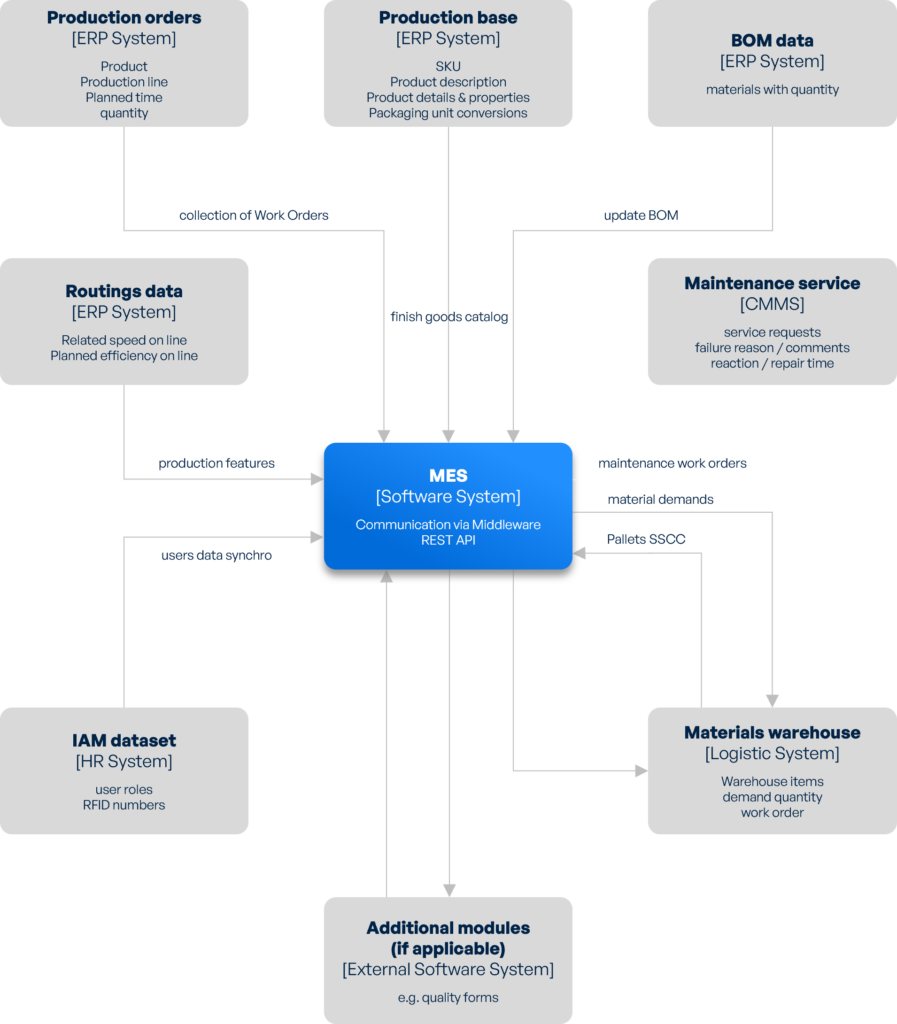
Schema che illustra l'architettura di integrazione dei sistemi di Accevo, mostrando vari moduli quali gli ordini di produzione, la manutenzione e la gestione dei materiali.

The integration of production systems offers various methods to facilitate seamless communication and data exchange between different components. These integration options include web services, which enable real-time interactions over the internet, RFC (Remote Function Call) for connecting SAP systems, intermediate databases for storing and sharing data, and versatile flat files like XML and CSV formats, which simplify structured data transfer. These diverse integration pathways empower organisations to efficiently synchronise their production systems, ensuring a harmonious flow of information across the entire operational landscape. 

What benefits production system integration brings?

  • Improved data visibility and flow: Integration can help to break down the silos that often exist between different manufacturing software systems, providing a single source of truth for data. This can improve data visibility and flow across the organization, leading to better decision-making.

  • Increased efficiency and productivity: Integration can automate manual tasks and streamline processes, freeing up employees to focus on more value-added activities. This can lead to increased efficiency and productivity across the manufacturing operation.

  • Reduced costs: Integration can help to reduce costs by eliminating duplicate systems and data entry, and by improving operational efficiency.

  • Improved customer satisfaction: Integration can help to improve customer satisfaction by enabling businesses to deliver products and services on time and to budget.

Per quale tipo di architettura si deve optare quando si progetta e si implementa un software di produzione?

Cloud Manufacturing 

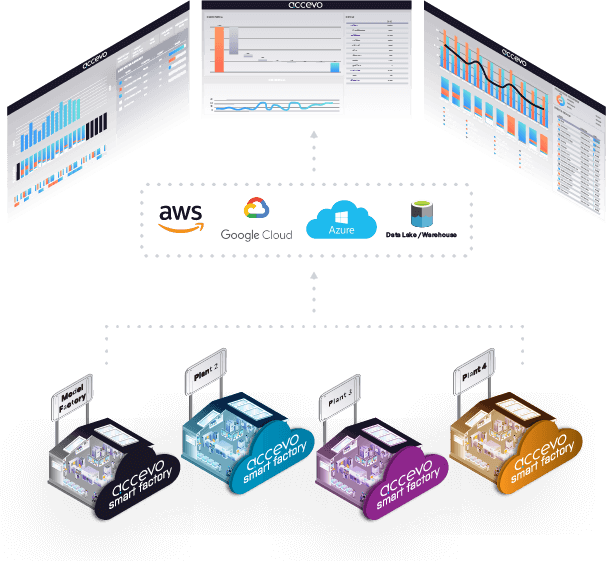
Cloud manufacturing is the innovative application of cloud computing within the manufacturing sector. Accevo offers a cloud-based manufacturing systems that leverage the power of the cloud to enhance manufacturing efficiency, flexibility, and cost-effectiveness. Our systems provide manufacturing companies with a comprehensive solutions for managing, diagnosing, monitoring, and controlling production lines, ensuring optimal performance and integration across all departments involved in production.

  • Horizontal Integration: Cloud-based production software improves horizontal integration across the supply chain, providing end-to-end visibility into the manufacturing process.

  • Emissions Tracking: Factories can monitor their carbon emissions in real-time, helping them set and track progress towards reduction goals.

  • Dynamic Production Scheduling: The system allows for dynamic adjustments to production schedules based on real-time demand and other factors.

Diagramma che illustra l’integrazione delle soluzioni cloud-native di Accevo con varie piattaforme e servizi cloud.

Quali sono le tendenze future del software di produzione?

aviazione oee

Ottimizzazione basata sull'intelligenza artificiale

Strumenti analitici che vanno oltre i semplici calcoli OEE e SPC e che sfruttano l'apprendimento automatico per realizzare casi d'uso come la gestione dei progetti e la manutenzione predittiva.

aviazione senza carta

Raccolta dati a margine

Dispositivi collocati accanto alle apparecchiature di generazione che fungono da interfacce operatore, motori di pre-elaborazione dei dati, ecc.
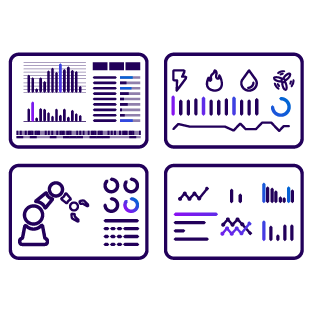
aumentare la trasparenza nel settore dell'aviazione

Gestione SDK/API

Kit per sviluppatori di software e altri strumenti che consentono a terzi di creare moduli/estensioni sulla base della soluzione, che possono essere promossi facoltativamente sui mercati.

Quali sono le caratteristiche fondamentali di un buon software di produzione?

Misure direttamente dal PLC

Integrate automation measurements and control its process parameters to be within quality limits. Ensure that your process is stable. Digital your technology into activities, steps and actions.

Analizzare tutti i difetti

Pareto analysis shows where to start production improvements. Monitor defects and stoppages reasons in real-time based on automatically gathered data from machines. Make your production transparent.

Operatore di guida
passo dopo passo

Step by step digital instructions and documentation for operators at assembly stations and lines to follow paperless production. Include images, movies, documents. Monitor action time for optimisation.

Qualità
limiti

Control cards are being automatically filled based on data from machines, devices or equipment. Monitor and react on reaching to high quality limit and get online notifications.

Di cosa bisogna tener conto quando si cerca un sistema per la produzione?

bisogni altrui

Comprendere le proprie esigenze:

  • Identify specific business needs and challenges.
  • Evaluate the scale and complexity of your operations.
altre caratteristiche

Caratteristiche e funzionalità:

  • List down the features and functionalities essential for your operations.
  • Ensure that the software can be customised to fit your specific needs.
budget degli altri

Bilancio:


  • Consider the initial implementation and ongoing maintenance costs.
  • Evaluate the return on investment.
la reputazione degli altri

Reputazione del fornitore:


  • Research the vendor’s reputation and track record.
  • Consider testimonials and reviews from other users.
sicurezza degli altri

Sicurezza e assistenza:

  • Ensure that the software adheres to industry-standard security protocols.
  • Confirm that the vendor offers reliable support and maintenance services.

Come avviare la trasformazione digitale?

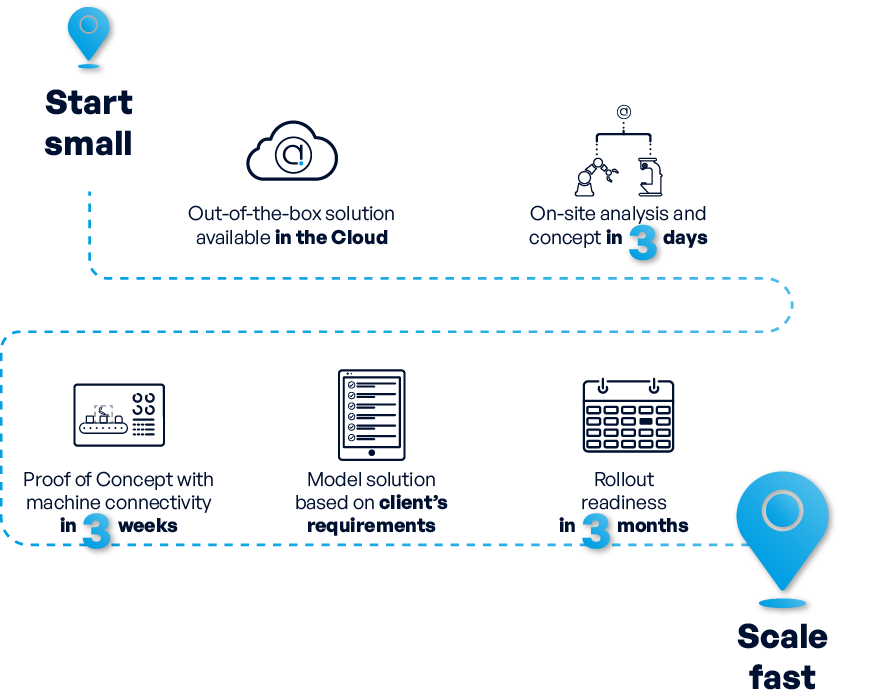
Diagramma che illustra il processo di implementazione delle soluzioni di Accevo, evidenziando fasi quali l’avvio su piccola scala, l’analisi, la verifica di fattibilità, l’implementazione del modello e il ridimensionamento.

Starting your digital transformation involves a well-defined roadmap that will progressively guide manufacturing processes in your factory toward increased efficiency and digital maturity. Here’s how to set the wheels in motion for your production digitisation:

  • Establish a Foundation: Kick-off by creating a solid wired network infrastructure. A dependable network is essential for connecting machinery and collecting data, which forms the cornerstone of your digital transformation.

  • Integrate and Optimize: Next, implement production software to analyse data and elevate your Overall Equipment Effectiveness (OEE). Build out your MES to streamline operations, integrating it with ERP systems to foster a synchronized data ecosystem across your facility.

  • Expand and Refine: Finally, enhance your digital landscape with advanced planning, scheduling systems, and comprehensive maintenance management software. Integrate a WMS for superior inventory control and adopt paperless systems. Utilize an EMS to align production costs with energy consumption for more sustainable operations.

Presentazione del sistema

Contatta il nostro esperto per discutere il sistema migliore per il vostro stabilimento

Piotr Kanka

Piotr Kańka

Industrial Software Expert

LinkedIn

Perché ottenere una demo?

  • A 60-minute online meeting with a dedicated specialist presenting a top system from an industry similar to yours
  • Live modeling of your production process
  • A budget quotation after the meeting

Articoli correlati

Get system presentation

Che cosa sta cercando?

Ciao, sembra che tu sia interessato al software per la produzione...

Iscriviti alla newsletter e ricevi un catalogo da condividere con i colleghi

By providing your email and clicking the “Download a catalogue” button, you agree to receive our newsletter.